Habits support us in daily life by helping us automate our routines.
Our everyday movement patterns—walking, sitting down and standing up, eating, speaking and so much more—work without us giving them a single thought. This saves a great deal of time and energy.
Our everyday movement patterns—walking, sitting down and standing up, eating, speaking and so much more—work without us giving them a single thought. This saves a great deal of time and energy.
We only become aware of them when our brain sends a “movement error message.” But not in order to celebrate or feel grateful that everything has been running smoothly and harmoniously—almost as if by magic—for years or even decades. Instead, we notice it only to complain about the current situation.
Dysfunctions can occur through wear and tear. That is a completely normal part of aging, but they can also arise from one-sided movement patterns or overuse.
So why not invest in yourself for once?
Try consciously connecting your brain with your body during everyday movements that normally happen automatically.
Try consciously connecting your brain with your body during everyday movements that normally happen automatically.
How do you get out of bed in the morning?
Do you use your jaw equally on both sides when eating?
How do you sit down on a chair—what seat height and what kind of surface do you sit on, and how do you stand up again?
Do you always start your first step with the same leg?
Do your step length, cadence, and the way you place your weight vary?
How does your breath flow?
How often do you feel relaxed (and maybe grateful?) in these moments?
Do you use your jaw equally on both sides when eating?
How do you sit down on a chair—what seat height and what kind of surface do you sit on, and how do you stand up again?
Do you always start your first step with the same leg?
Do your step length, cadence, and the way you place your weight vary?
How does your breath flow?
How often do you feel relaxed (and maybe grateful?) in these moments?
By becoming aware and by lightly and simply varying your daily movement patterns, you can help keep your joints more supple—and maybe even lift your mood. It might even be contagious. ;)
What will your colleagues say when they see you walking backward one moment and sideways or hopping the next?
Children move naturally in the way that best supports healthy growth. The way young children bounce in place, for example, helps center the hip. Imitating them is definitely recommended.
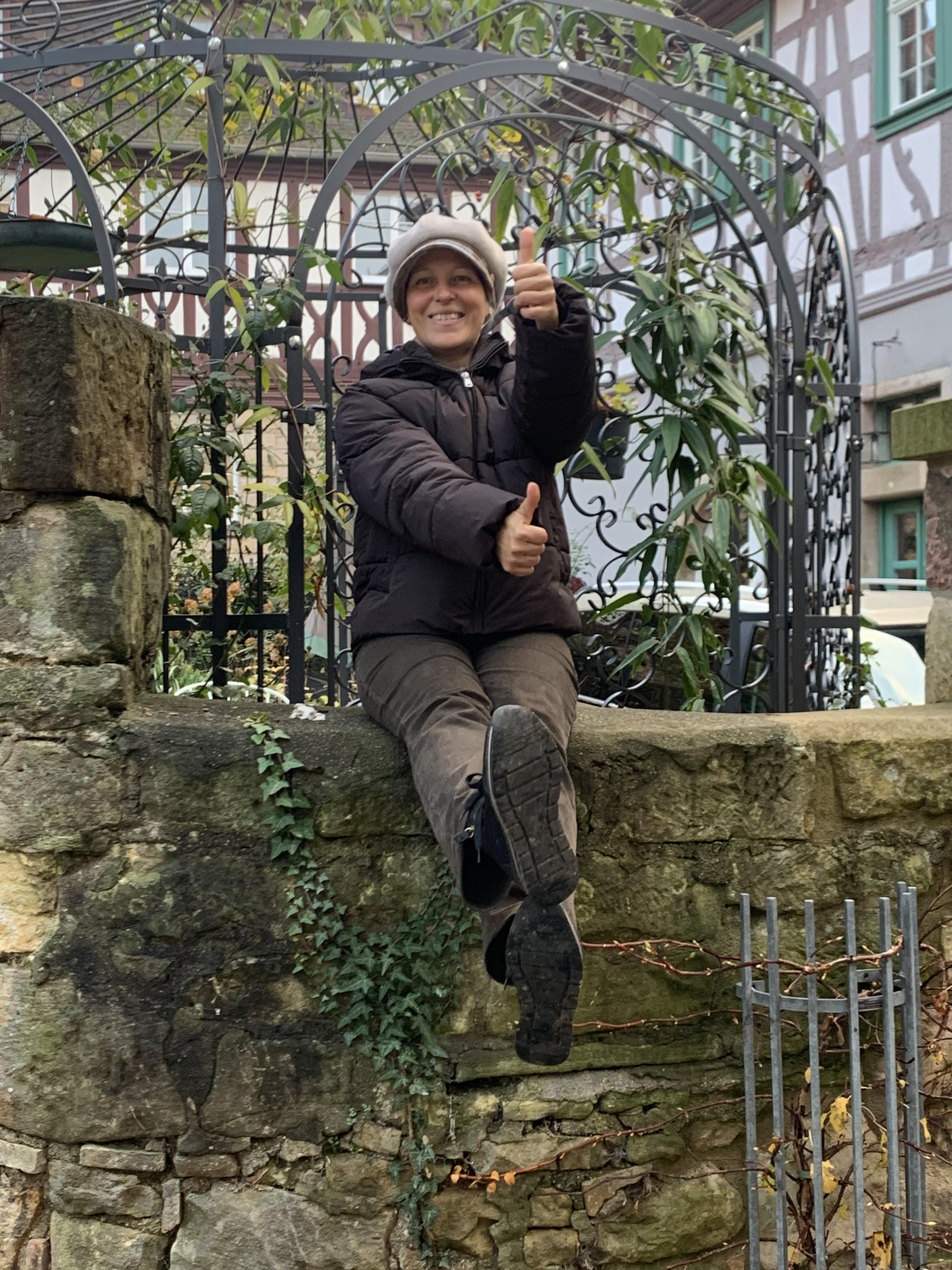
Let your legs (and your soul) dangle for a while.
Dangling your legs helps relieve the knee and ankle joints, improves blood circulation in the legs, and stimulates the regeneration of joint cartilage.
Dangling your legs helps relieve the knee and ankle joints, improves blood circulation in the legs, and stimulates the regeneration of joint cartilage.
Here as well, the knee and the lower leg may hang freely, with light weight placed on the other side of the body.
Traction in a single-leg squat stimulates the body to balance itself under uncommon loading conditions. When you integrate this mindfully into your daily routine, you support the fascia, joints, and muscles that are otherwise rarely activated.
On the go, by a beautiful house wall, a short flow for your joints and muscles.
Do you sit a lot today and don’t have the time or motivation to work out? No problem. Simply stand up and sit back down again. Do this ten times in a row, ideally with some variations. This short exercise gets your heart and circulatory system going and activates your back and abdominal muscles.
Ideally, you should include one round of “standing up and sitting down in variations” every two hours of sitting. Regularly standing up can reduce muscular fatigue in the back by up to 25 percent. Many issues such as a rounded back or neck pain are caused by poor posture and sitting for too long without breaks. During seated screen work, our neck ends up stabilizing the back and the forward-hanging head. That job is actually meant for our skeleton, back, and abdominal muscles—but in a seated position, they tend to switch off.
Stretch, raise your arms overhead, gently bounce, yawn, and breathe.
One possible variation: open your chest and place one foot directly behind the other, as if on a line. Stand up like this. How does it feel? Then reverse the foot position before sitting down again. Repeat this 10 times.
In addition, you can activate your sitting muscles by using different seat surfaces. Alternate between a hard cushion and a soft one. You can also sit alternately on a roll, a rolled-up towel, or your jacket—sometimes lengthwise, sometimes crosswise.
From time to time, consciously adopt an upright posture: sit tall and straight, from your lower back all the way to the top of your head. Use your muscles intentionally to support your skeleton and joints. You might like to take a few deep breaths and close your eyes, sensing the beauty and strength of your inner center—if you like, imagine it as a strong, beautiful tree trunk. Take a short moment to feel your spine, your muscles, and your breathing.
Treat yourself to a brief “posture break,” with a smile. 😃
While traveling on vacation, here in St. Tropez, I’m giving my joints — including the left side, of course ;) — a moment of attention.
🌿 Relaxing Supine Flow for Strength and Relaxation
This flow can help keep your joints supple, strengthen your core, stimulate digestion, and relax and strengthen your abdominal, shoulder, and back muscles — all to help reduce stress. If you like, close your eyes during the practice.
Your breath sets the rhythm — it can reflect your current state: gentle and calm, or strong and dynamic. You can repeat each movement, for example, three times, or follow your intuition and let your body guide you.
Leg stretch: Stretch one foot forward and inhale as you lift your leg. Point the sole of your foot toward the ceiling and exhale as you lower the leg.
Knee-to-chest — Mobilization & Relaxation: Draw one knee toward your chest while gently lifting and lowering the other leg. This mobilizes your hips and relaxes your lower back.
Exhale and bring both knees to your chest, then inhale as you stretch your arms to the sides and legs forward.
Finally, hug your knees to your chest and gently circle your lower back, then your shoulders over your upper back. Let your breath flow softly in and out through your nose.
End the flow with a few minutes in a relaxation pose of your choice. Allow yourself this conscious pause to regenerate both body and mind. 🌿
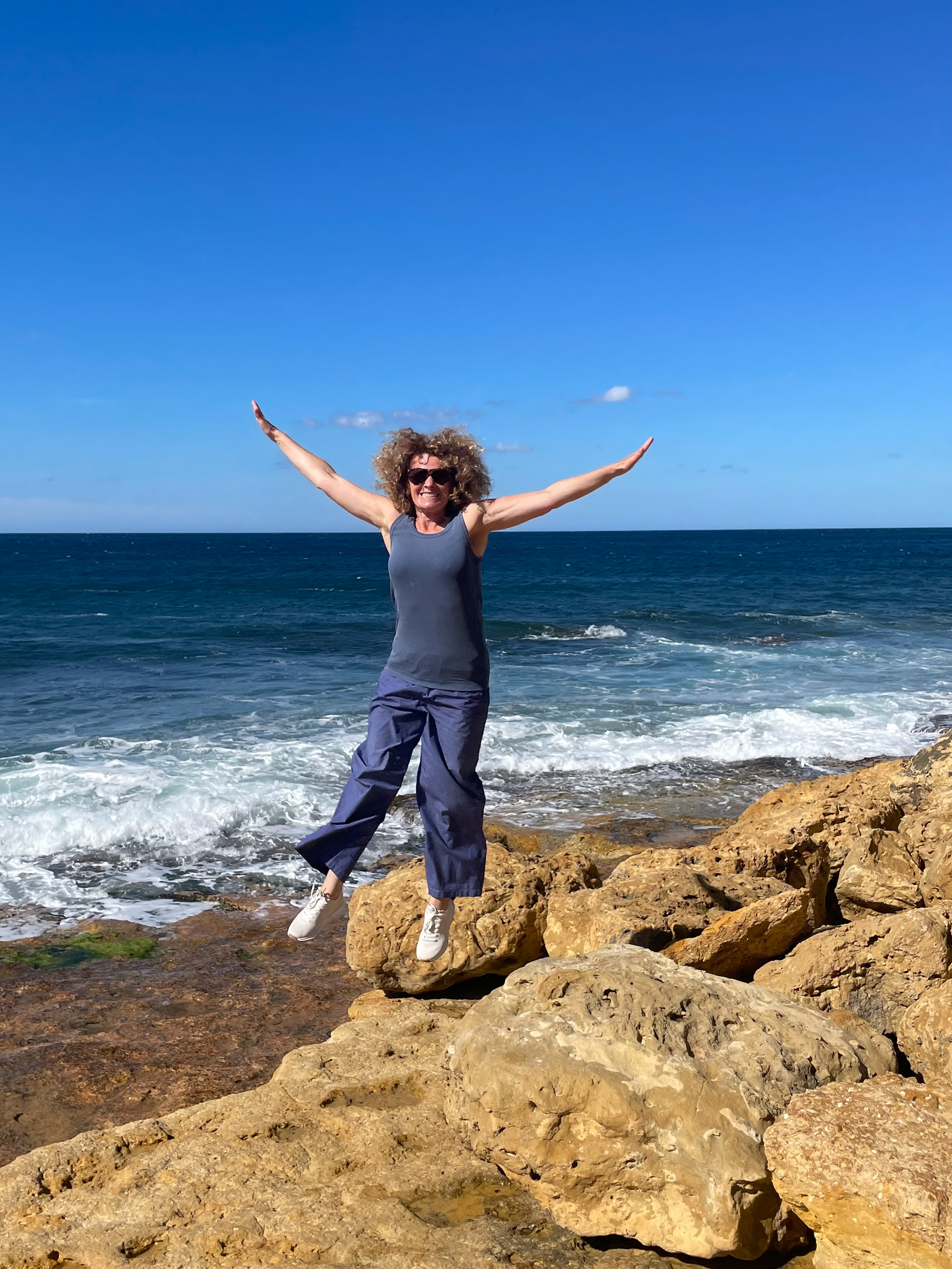
A fully stretched, jumping posture brings joy to life and is especially good for your fascia. Repeat it as often as it brings you pleasure!
Varying everyday movements can reduce wear and tear—and can be a really fun!